

How to Protect Belongings from Kansas Humidity in a Storage Unit
Kansas swings from July steam to January freeze. Here's what that actually does to stored belongings — and the prep that matters more than any thermostat.
What Kansas weather actually does to stored belongings
The honest version: the enemy is not temperature, it is moisture and the swing between extremes. Humid air condenses on cold surfaces, cardboard wicks water off concrete, and trapped damp becomes mildew. Almost everything else — furniture, tools, books, clothes, holiday decor — rides out Kansas temperatures fine in a well-sealed drive-up unit.
Lawrence sees dew points in the 70s in July and hard freezes in January. Neither one hurts a dresser. What hurts a dresser is sitting on bare concrete under a plastic sheet through both.
The prep that does the real work
Storage pros protect belongings with technique, not thermostats. Do these six things once and Kansas humidity becomes a non-event.
- Everything off the floor — pallets or 2x4 rails under boxes and furniture
- Plastic bins beat cardboard for anything stored past one season
- Wrap furniture in breathable moving blankets, never plastic sheet (it traps condensation)
- Stand mattresses and sofas on end, covered, off the concrete
- A couple of tub-style moisture absorbers per unit, swapped seasonally
- Leave an air channel — do not pack contents tight against the walls
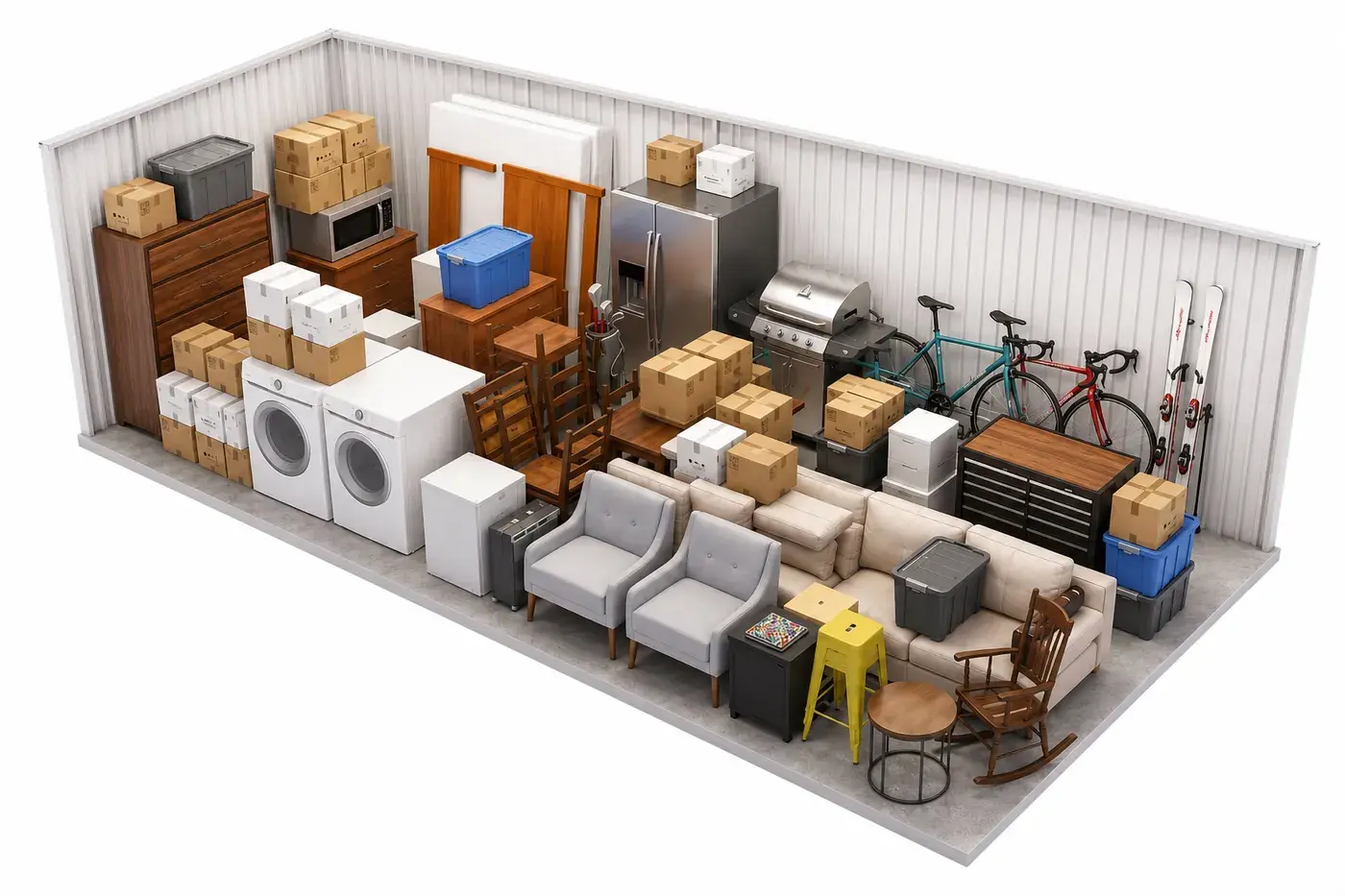
The short list that needs more care
A few categories genuinely dislike temperature swings. For these, keep them at home or prep them specifically.
- Photos, vinyl records, and original art: keep at home if irreplaceable
- Electronics: fine if fully dry and stored in original boxes or bins with desiccant packs
- Leather: condition first, breathable cover, never plastic
- Candles and pressurized cans: take them home — July heat wins
- Liquids of any kind: home, always — the January freeze splits containers
Why drive-up storage still wins in Lawrence
A sealed, gated, camera-watched drive-up unit with prepped contents outperforms a poorly-packed climate hallway every time — and you park a truck two feet from the door. Every unit at Free State Storage is drive-up, from a 5x10 closet to a 10x30 house. Do the prep once and Kansas weather is a non-event.
The twice-a-year check
Twice a year — after the July peak and the January trough — swing by for ten minutes. Swap moisture absorbers, crack the door, eyeball the corners. Gate hours run 6 AM to 10 PM, seven days a week, so the check fits around a Saturday errand on 23rd Street.
Common questions
Do I need climate-controlled storage in Kansas?
For most household belongings, no. Furniture, tools, books, clothing and decor do fine in a sealed drive-up unit when they are off the floor, in bins, and covered with breathable blankets. The items that genuinely need a stable environment are irreplaceable photos, original art, vinyl and fine instruments, and those are better kept at home.
How do I keep moisture out of a storage unit?
Keep everything off the concrete on pallets or rails, use plastic bins instead of cardboard, never wrap furniture in plastic sheet, leave an air channel between contents and the walls, and put two tub-style moisture absorbers in the unit. Swap the absorbers after summer and after winter.
Can I store a mattress in a storage unit in Kansas?
Yes. Stand it on end on a pallet, cover it with a breathable mattress bag or moving blanket rather than plastic, and keep it away from the exterior wall. That prevents the condensation that causes mildew.
Most readers of this guide pick a 10x10.
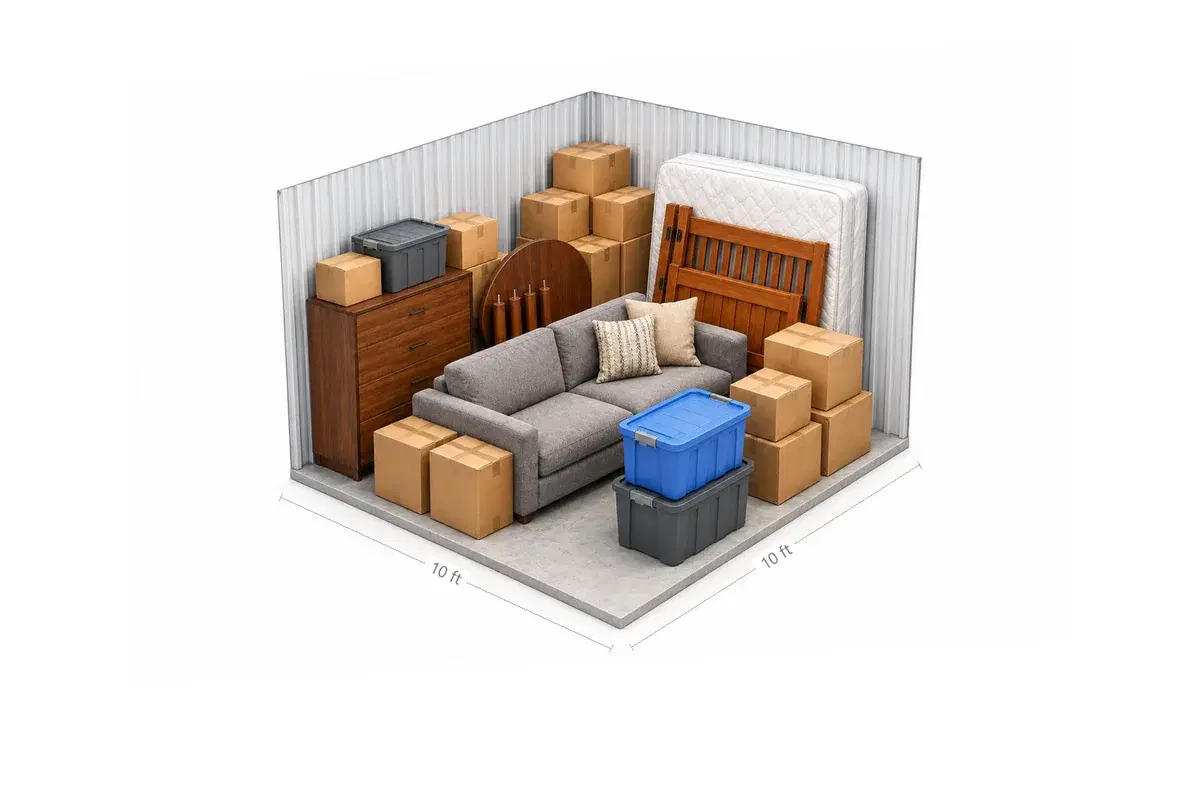
Full 1-bedroom apartment with appliances.
See 10x10 details